

Meal tracking connects an after-school program’s daily attendance to its CACFP or NSLP after-school snack reimbursement. Programs get paid only when they can show which children were present and what was served to them that day. A gap in tracking becomes a gap in funding.
Programs that log meals on paper, or reconstruct the data after the fact, tend to lose staff time and sometimes lose reimbursement they’ve already earned. Here’s what a complete record needs to include, why attendance and meal data have to match, and what a simpler process looks like.
What Counts as Meal Tracking in an After-School Program?
A complete meal record links a specific meal or snack to a specific child on a specific day, and is matched against that day’s attendance. To meet CACFP or NSLP documentation requirements, a record generally needs to show:

Programs that keep attendance and meal data in separate systems, especially when different staff maintain each, often struggle to produce a clean link when it’s time to file a claim.
Meal Data Is Tied to Funding
Meal tracking is often treated as a nutrition task, but it functions as an operations task with direct revenue impact. The record is what triggers the reimbursement. A meal served without a matching record can’t be claimed, no matter how well it met nutrition guidelines.
For the 2026-2027 program year (July 1, 2026 through June 30, 2027), the federal reimbursement rate for after-school snacks is $1.30 for free-eligible children, $0.65 for reduced-price, and $0.12 for paid snacks, according to USDA’s published CACFP reimbursement rates. These rates apply to every eligible snack served, but a program only gets paid when it can document the meal against a verified attendance record.

The order matters too. A program has to confirm who was present before it can claim credit for what was served. If attendance data is inconsistent across sites, the meal claim becomes questionable even when the meals themselves were served correctly.
The Real Cost of Inconsistent Meal Tracking
Programs feel the impact of inconsistent tracking in two main ways.
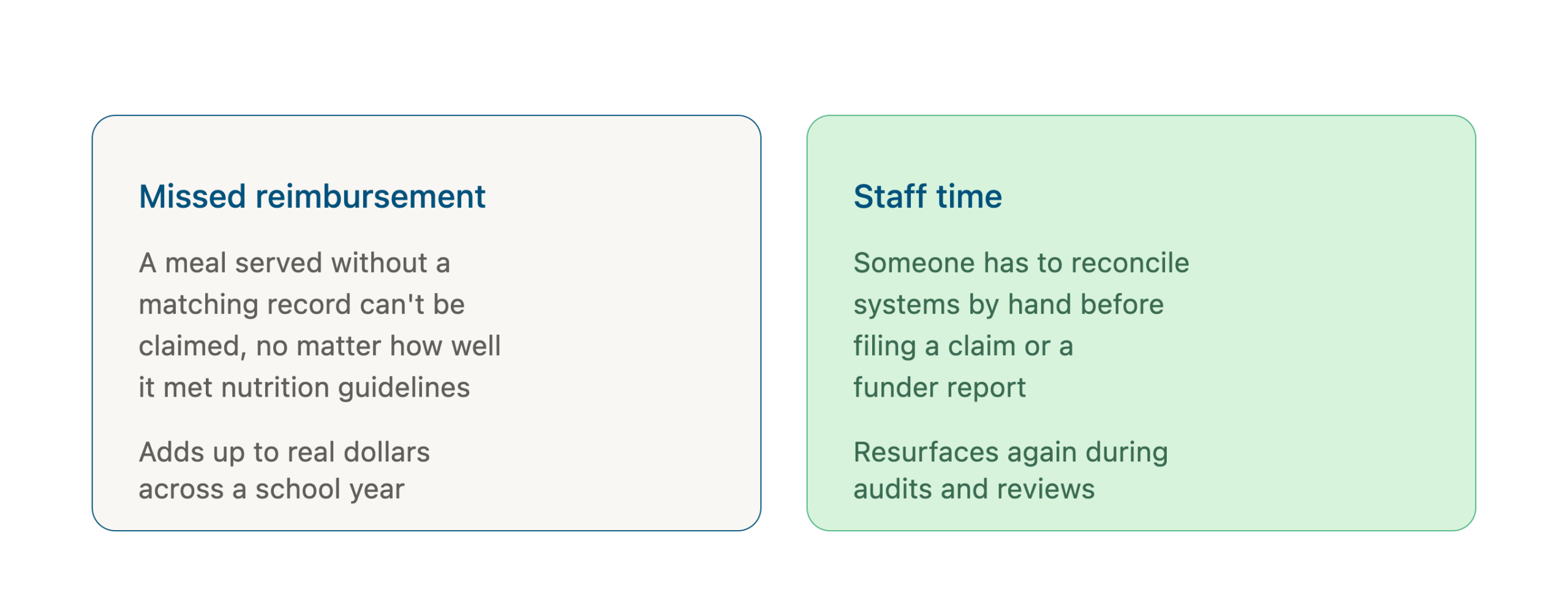
Staff time, side note. That work comes out of hours that would otherwise go toward programming, and it tends to resurface during audits, when CACFP and NSLP claims get reviewed after the fact. A program with mismatched attendance and meal records is the one most likely to face a repayment request.
Meal Tracking and the Bigger Compliance Picture
Funders increasingly expect attendance, meal service, and outcome data to form one connected picture rather than three separate reports pulled from three separate systems. This shows up for 21st CCLC grantees in particular, as well as for other state- and local-ready compliance reporting requirements.
Meal program rules also change from year to year, so a process built around manual reconciliation must be rebuilt whenever the requirements shift. A more flexible system absorbs those changes without a full rebuild.
Food access adds another layer of stakes. In 2024, 18.4% of U.S. households with children experienced food insecurity at some point during the year, and in 9.1% of those households, both children and adults were affected, according to USDA’s Economic Research Service. After-school meal and snack programs are often one of the more reliable ways these families access food during the week, which makes getting the reimbursement process right more than an administrative concern.

How Attendance-Based Tracking Solves the Problem
Good meal tracking means fewer separate records to maintain, not additional forms layered on top of the ones staff already keep.
For programs where every enrolled child receives the same meal or snack, the attendance record already answers the meal question: the headcount and meal count are the same. With AfterSchool HQ, staff logs attendance once at check-in, whether that’s a manual entry, a QR/kiosk scan, or a PIN, and that single record becomes the basis for both program attendance and meal documentation. There’s no second form to fill out later and no separate spreadsheet to reconcile before a deadline.
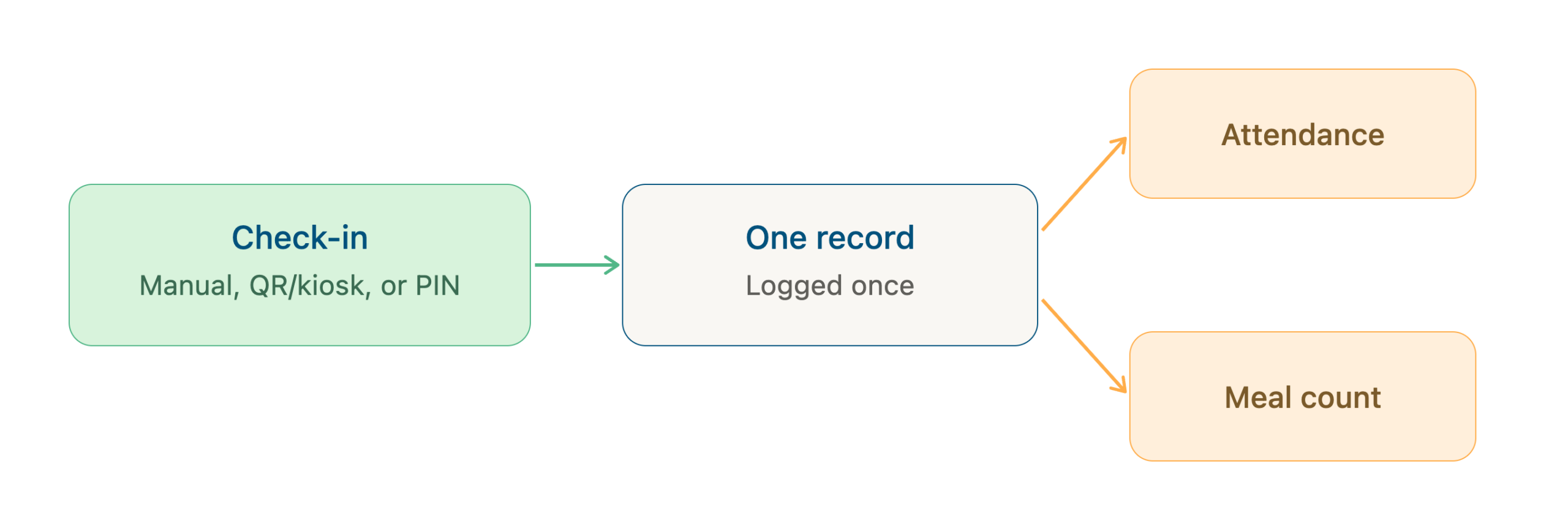
For programs that need more detail than headcount, like which specific items were served on a given day, AfterSchool HQ’s survey tool can capture that information separately and tie it back to the same records.
Frequently Asked Questions
What is CACFP and how does it apply to after-school programs? CACFP, the Child and Adult Care Food Program, is a federal program that reimburses eligible after-school programs for meals and snacks served to enrolled youth. Programs must document attendance and meal service to receive payment.
Do after-school programs have to track meals to get reimbursed? Yes. Reimbursement under CACFP or NSLP after-school snack funding requires a documented, verifiable record showing who was present and what was served to them that day.
What happens if meal tracking data is incomplete or inconsistent? Incomplete records put reimbursement at risk, can trigger repayment requests during an audit, and often mean staff has to spend hours reconstructing data by hand before a claim can be filed.
How does meal tracking connect to grant reporting, like 21st CCLC? Many funders, including 21st CCLC, expect attendance, meal service, and program outcome data to align in a single, connected record. Keeping meal data separate from attendance data makes it harder to produce.
What’s the easiest way for after-school programs to track meals accurately? For programs where every enrolled child receives the same meal or snack, tying meal documentation to the same attendance record staff already keep removes the manual reconciliation step and creates a clean, audit-ready trail without extra work.
Sources
Federal Register. “Child and Adult Care Food Program: National Average Payment Rates, Day Care Home Food Service Payment Rates, and Administrative Reimbursement Rates for Sponsoring Organizations of Day Care Homes for the Period July 1, 2026, Through June 30, 2027.” Published July 27, 2026. https://www.federalregister.gov/documents/2026/07/27/2026-15071/child-and-adult-care-food-program-national-average-payment-rates-day-care-home-food-service-payment
USDA Economic Research Service. “Household Food Security in the United States in 2024.” Rabbitt, M.P., et al. December 2025. https://www.ers.usda.gov/publications/pub-details?pubid=113622