
If you lead a school district that runs ELO-P, ASES, or Attendance Recovery programs, you already have a student information system in place: Aequitas (Q), PowerSchool, Infinite Campus, Aeries, or something similar. It’s built to run your in-school operations: enrollment, grades, and regular-day attendance. What it isn’t built for is your expanded learning data.
That’s not a problem in itself. Compliance is compliance, and the district’s SIS exists for good reasons: state reporting, ADA calculations, and audit trails that regulators expect to see in a single official place.
The problem shows up later, when something changes.
When your in-school SIS falls short
District leaders running ELO-P, ASES, or Attendance Recovery face a specific problem. Your in-school SIS tracks the school day but not after-school hours. Expanded learning attendance often lives in separate spreadsheets, paper rosters, or site-by-site tools, with one system per site and one process per coordinator, leaving no single source of truth to tie it back to your core student records.
That gap used to be a minor inconvenience. Now it’s a compliance risk. Under AB 1113, ELO-P, ASES, and 21st CCLC attendance must flow into CALPADS alongside your in-school data, and a missing or inconsistent record can delay your entire district’s end-of-year certification.
Reconciling scattered site data into a single clean report is what stands between your district and a completed submission.
In-school data and OST data aren’t the same job
Your district’s SIS is designed for in-school programs and activities: enrollment, grades, and regular-day attendance. It was never built to track ELO-P, ASES, or Attendance Recovery, and there’s no reason it should. That’s a separate program, operating on a different schedule, with its own reporting requirements.
Expanded learning needs its own system, built specifically for OST attendance, enrollment, and outcomes. It won’t replace your SIS but will be a companion to it. The real value shows up when that companion system can talk to your SIS, so your in-school and OST data reconcile into one complete record instead of living in two disconnected places.
What to look for if you’re building that second system
Not all program management tools are designed with data ownership and continuity in mind. Some simply serve as front-ends for data entry that feeds into another system. If these aspects are important to you, consider looking for a few key features:
Customizable, CALPADS-ready reporting
You should be able to generate exactly the report a given moment calls for, whether it is a CALPADS submission, a board update, or a grant renewal, without reformatting data by hand every time. Look for a system that produces CALPADS-ready ELO-P and ASES records natively, not one that leaves your team rebuilding the format from a raw export.
Historical continuity across program changes
If you add a new community partner, have a change in reporting requirements, or go through a leadership transition, your ELO-P and ASES history should still be there, usable, and tellable as a single coherent multi-year record, not something a new coordinator has to reconstruct from old spreadsheets.
Reporting built for more than the compliance minimum
Your system should also surface what your district and site leads need to make decisions: engagement trends by site, year-over-year growth, and outcomes you can point to when it’s time to defend your program’s budget and to go beyond what’s required to pass an audit.
Where AfterSchool HQ fits in

Using a district SIS is essential and here to stay, and it makes sense because districts require a unified, standardized system for compliance, which serves a clear purpose. However, this system only tells part of the story.
The full picture, the state actually needs, comes from integrating in-school data with ELO-P/ASES data, rather than keeping them in separate, disconnected systems.
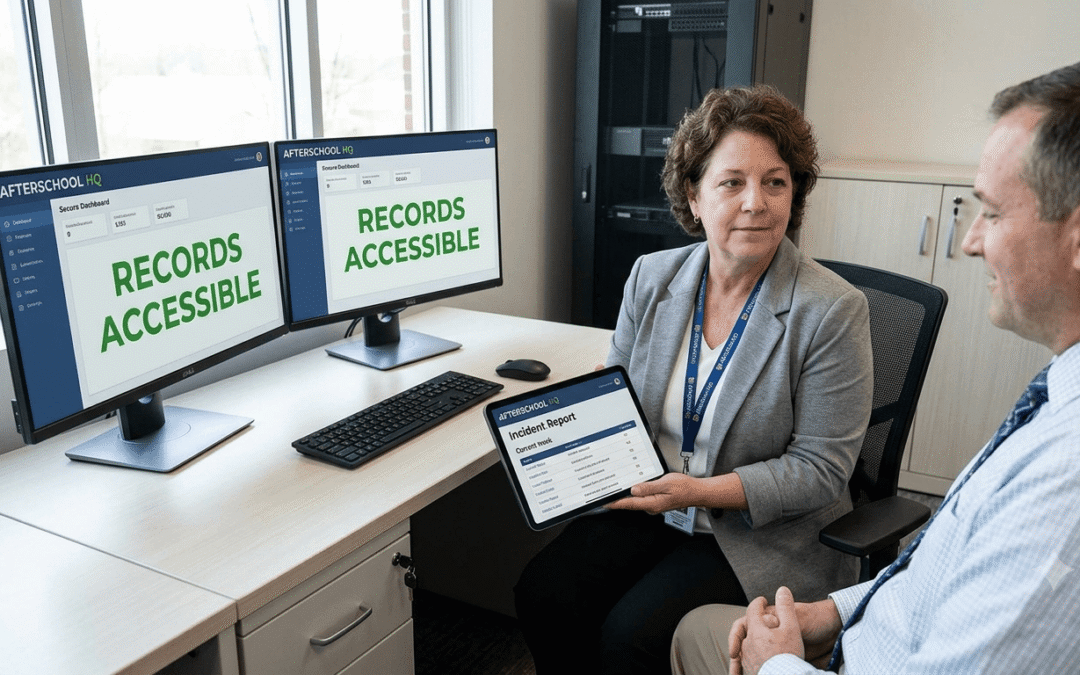
Here’s what that looks like in practice: Enrollment and demographic data from your district’s SIS flows into AfterSchool HQ automatically, so your team isn’t re-entering student information by hand across two systems. At the same time, ELO-P, ASES, and Attendance Recovery attendance captured in AfterSchool HQ flows back to your SIS, keeping your core student records current without any manual reconciliation.
The platform also covers the full lifecycle of your expanded learning programs, from parent registration through program completion, so attendance, enrollment, and outcomes data stays connected from the first sign-up to the last day of programming.
On the reporting side, AfterSchool HQ generates CALPADS-ready ELO-P, ASES, and Attendance Recovery reports built to match what the state actually asks for, customizable to your district’s specific board and funder needs.
The result: one synced system of record instead of two disconnected ones. Your in-school SIS handles the school day. AfterSchool HQ handles expanded learning. Together, they finally tell the complete story.